Why a 3-Phase Lithium-Ion UPS System Outperforms Traditional Backup Power
Large-scale facilities — data centers, manufacturing plants, hospitals, and industrial operations — run on three-phase power. And as businesses modernize their infrastructure, one technology is rapidly replacing traditional lead-acid UPS systems: the 3-phase lithium-ion UPS.
What Is a 3-Phase Lithium-Ion UPS System?
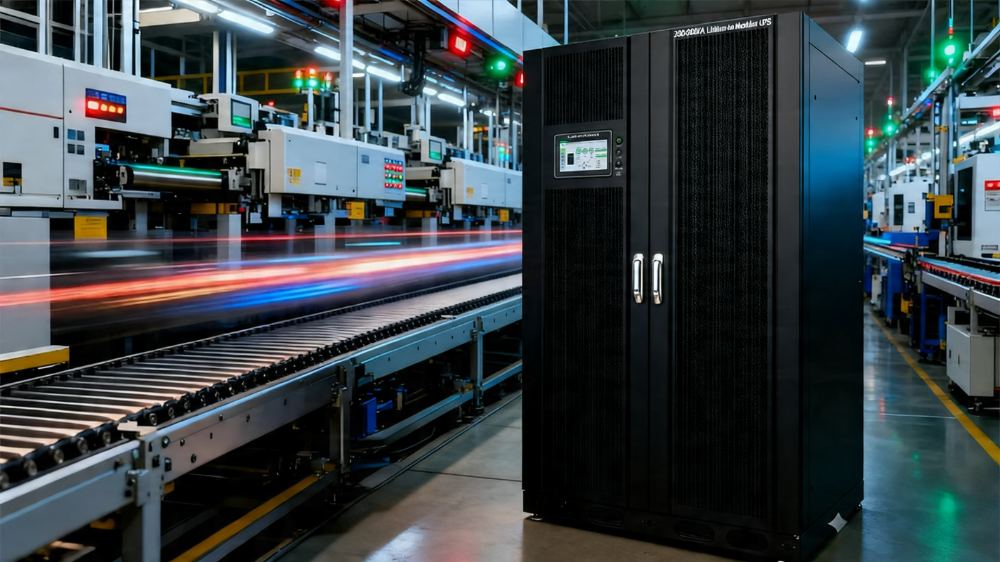
A 3-phase lithium-ion UPS combines three-phase electrical distribution with lithium-ion battery chemistry. It delivers higher efficiency and supports heavy industrial loads.
Key Advantages
The Key Advantages of 3-Phase Lithium-Ion UPS Systems
The shift from lead-acid to lithium-ion in three-phase UPS applications is being driven by a combination of operational, financial, and logistical benefits. Here is a detailed look at each advantage.
1. Dramatically Longer Battery Lifespan
This is the most compelling argument for upgrading. VRLA batteries in a traditional three-phase UPS typically need replacement every 3 to 5 years. In contrast, lithium-ion batteries — particularly lithium iron phosphate (LiFePO4) chemistry — are rated for 10 to 15 years and can handle 3,000 to 8,000+ charge/discharge cycles before significant capacity degradation.
For a large facility running a 100kVA or greater UPS system, battery replacement is a major project: it requires specialized handling, coordination with facilities teams, and often a planned maintenance window. Lithium-ion systems can cut the number of replacement events in half or more over the life of the UPS infrastructure.
2. Smaller Footprint, Higher Energy Density
Lithium-ion batteries store up to four times more energy per unit of weight compared to lead-acid. In a three-phase rack-mount UPS application, this translates directly to a smaller cabinet footprint for the same runtime — or dramatically extended runtime in the same cabinet size as a legacy VRLA system.
For data center operators where every square foot of raised floor carries a cost, this density advantage is significant. A lithium-ion 3-phase UPS can free up valuable rack space or room square footage that would otherwise be occupied by external battery cabinets.
3. Faster Recharge Times
After an outage, getting your UPS back to full capacity quickly is critical — especially in areas prone to multiple grid events in a single day. Lead-acid batteries typically require 8 to 12 hours to fully recharge. Lithium-ion batteries in a well-designed 3-phase UPS can reach full charge in as little as 1 to 2 hours, dramatically reducing your window of vulnerability after a discharge event.
4. Higher Efficiency, Lower Energy Costs
Modern 3-phase lithium UPS systems operate with charge and discharge efficiencies exceeding 95–98%. Lead-acid systems typically lose more energy to heat during charging and discharging. In a large facility where UPS systems run 24/7, this efficiency difference compounds into meaningful annual energy savings — particularly relevant as energy costs rise and sustainability targets become more prominent on the corporate agenda.
5. Wider Operating Temperature Range
VRLA batteries are highly sensitive to temperature. Operating above 25°C accelerates degradation significantly — a rule of thumb in the industry is that every 10°C increase above optimal temperature cuts battery life in half. Lithium-ion chemistry is considerably more tolerant of elevated temperatures and performs reliably across a much broader range, making 3-phase lithium UPS systems well suited to edge locations, industrial environments, and facilities with less precise climate control.
6. Integrated Battery Management System (BMS)
Every quality 3-phase lithium-ion UPS includes an advanced Battery Management System that monitors cell voltage, temperature, state of charge, and state of health in real time. The BMS prevents overcharging, deep discharge, and thermal runaway — providing a layer of intelligence that VRLA systems simply cannot match. Combined with SNMP remote monitoring, this means your facilities team receives early warning of any degradation long before a failure event occurs.
7. Lower Total Cost of Ownership
The upfront cost of a 3-phase lithium UPS is higher than an equivalent VRLA system. However, when you calculate total cost of ownership over a 10-year horizon — factoring in battery replacement cycles, disposal costs, reduced energy consumption, and lower maintenance labor — lithium-ion consistently delivers a lower overall cost. For organizations planning long equipment refresh cycles, this financial case is difficult to ignore.
| Specification | VRLA | Lithium-Ion |
|---|---|---|
| Lifespan | 3–5 years | 10–15 years |
| Cycles | 200–500 | 3000+ |
| Efficiency | 80–85% | 95–98% |
“Over a 10-year horizon, lithium-ion delivers lower total cost.”
Who Should Use It?
- Data centers: high density and efficiency
- Manufacturing: better temperature tolerance
- Healthcare: critical uptime
- Edge sites: low maintenance
Sizing Guide
- Calculate load
- Apply 60–80% rule
- Define runtime
- Match voltage
- Plan expansion
Conclusion
3-phase lithium-ion UPS systems outperform lead-acid in lifespan, efficiency, and total cost — making them the future of backup power.
